




Engineering controls, housekeeping and hazard management remain fundamental to preventing slips, trips and falls. But what happens when those preventative layers have done everything reasonably practicable and somebody still loses traction? Justin Leary, BDes (Hons) CMgr FCMI, explores how Human Performance, Situational Awareness and experiential learning could provide an additional layer of defence.
Even within highly regulated chemical and process operations, unexpected loss of traction can still occur.
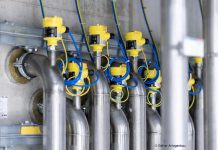
Chemical plants are dynamic environments. Process contamination occurs, weather is tracked between external and internal areas, surfaces and gradients change, equipment leaks and conditions can alter between inspections. Established facilities present another challenge, with pipes, pillars and thresholds forming part of the building fabric alongside modern equipment integrated into legacy infrastructure.
Engineering these risks out should always be the first objective, but complete elimination is not always reasonably practicable. This leaves an important area of residual risk: what happens when the preventative layers have done their job, but somebody still loses traction?
The human dimension of residual risk
Around ten years ago, I helped introduce Slip Simulator™ training within a UK nuclear licensed site and subsequently implemented a further programme within an Upper Tier COMAH operation. Those environments reinforced something I had seen repeatedly throughout my career: strong engineering and management systems reduce risk significantly, but neither systems nor people are perfect.
People become familiar with their workplaces. A route walked hundreds of times without incident naturally demands less conscious attention. Assumptions develop, behaviours become habitual and our perception of risk can change precisely because nothing has gone wrong before.
My wider work in Human Performance considered these factors alongside task demands, distractions, changes from routine, time pressure, repetitive work, complacency, overconfidence and inaccurate risk perception. The objective was never to blame people for making mistakes, but to recognise human fallibility and build layers of defence around it.
Situational Awareness forms part of that approach because recognising a changing condition or critical cue creates an opportunity to respond before an event occurs. However, the cue can still be missed, the hazard unseen or the preventative layers otherwise defeated. At that point the ability to respond becomes relevant.
Knowing is not the same as experiencing
People already know that slippery surfaces can cause falls, but knowing something intellectually and experiencing it physically are very different forms of learning.
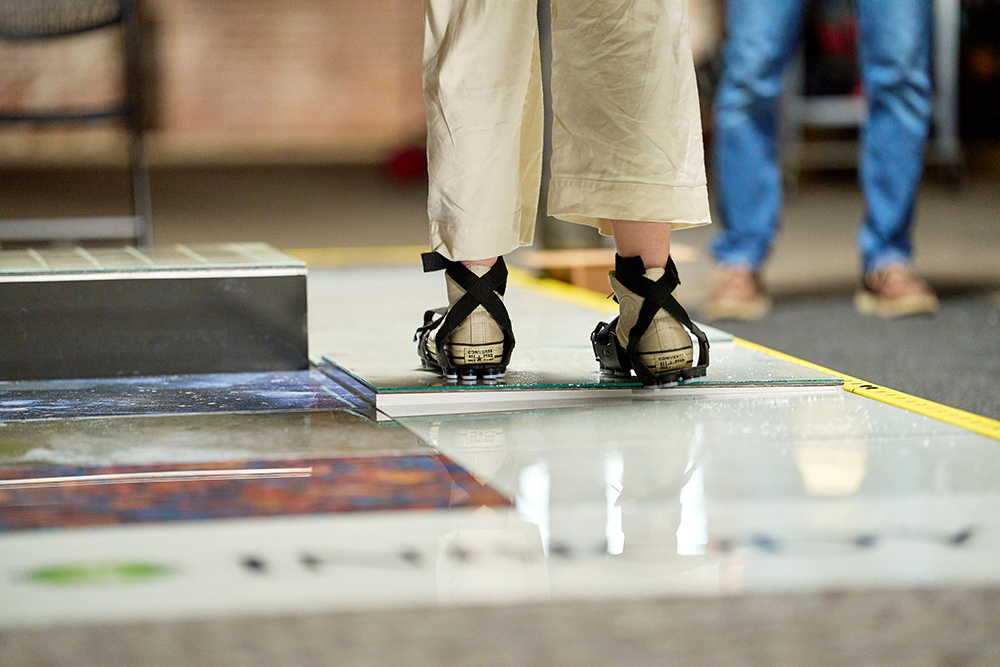
Slip simulation allows participants to experience, under controlled and safe conditions, the moment when traction unexpectedly disappears. Secured within the system, they can feel how quickly stability changes, experience their instinctive response and practise techniques intended to recover, stabilise and navigate the hazard without falling.
The experience also makes the risk tangible and memorable. An apparently ordinary step can suddenly become a loss-of-traction or out-of-balance event. This is where experiential learning, Situational Awareness and Human Performance begin to connect. The objective is not simply to teach somebody how to react to a slip, but to develop their capability to respond when prevention and recognition are not enough.
The principle is very much “Learn by Doing”. It does not replace conventional controls but provides an additional layer of defence against the residual risk that remains.
What does the evidence tell us?
A 2023 systematic review and meta-analysis published in Physical Therapy included 29 randomised trials of reactive balance training and found that participants receiving the training were less likely to fall and experienced fewer falls than control groups. Importantly, those studies involved older adults and people with balance impairments rather than healthy working-age industrial populations, so we cannot assume the findings transfer directly into workplaces.
Operational evidence provides another perspective. Los Alamos National Laboratory in the United States introduced slip simulation training in 2011. By March 2012, 913 employees had physically participated in the practical training. During the period examined, the practical participant group recorded three slick-surface falls before training and none afterwards.
The finding needs careful interpretation. This was operational observational data rather than a randomised controlled trial, so it demonstrates an association rather than establishing that the training caused the reduction.
Tackling the residual risk
Conventional controls act predominantly before traction is lost. They remove hazards, prevent exposure or help somebody recognise changing conditions. Once traction is lost, however, a different sequence begins, where balance, posture, movement and reactive stepping can influence whether that disturbance becomes a fall.
None of this diminishes the importance of eliminating hazards. Contamination still needs controlling, defects still need fixing and workplace design still needs improving wherever reasonably practicable. Equally, safety systems should not be designed around an expectation that the workplace will never change or that human awareness will always be perfect.
For chemical and process operations, tackling residual slip risk means recognising both sides of the problem.
The priority remains preventing the loss of traction wherever reasonably practicable and developing Situational Awareness and hazard perception so that changing conditions and critical cues are more likely to be recognised.
But from my experience, there is also a case for developing the capability to respond when prevention and recognition are not enough. Experiential slip training does not replace conventional prevention but addresses the residual risk that remains when somebody unexpectedly loses traction and has to respond.
The opportunity is not to choose between prevention or response, but to recognise that effective defence in depth has both.
References
Devasahayam, A.J. et al. (2023). The Effect of Reactive Balance Training on Falls in Daily Life: An Updated Systematic Review and Meta-Analysis. Physical Therapy, 103(1), pzac154. DOI: 10.1093/ptj/pzac154.
Los Alamos National Laboratory (2012). Impact of Slip Simulator Training at LANL. LA-UR-12-20335.