




Innovation to decarbonise ammonia production has reached a 20-year peak according to the latest patent data* reported by Appleyard Lees.
This is one of the findings in the fifth annual edition of the now-published Inside Green Innovation: Progress Report** from the leading intellectual property firm.
Appleyard Lees’ partner Chris Mason said: “Ammonia synthesis releases 450 million metric tonnes of carbon dioxide per year, accounting for about one per cent of global carbon dioxide emissions. This highlights the need to improve the sustainability of ammonia production and is shown in significant growth for patent applications aimed at developing new sustainable ammonia production technologies.”
Patents for sustainable ammonia production increase 260% since 2019
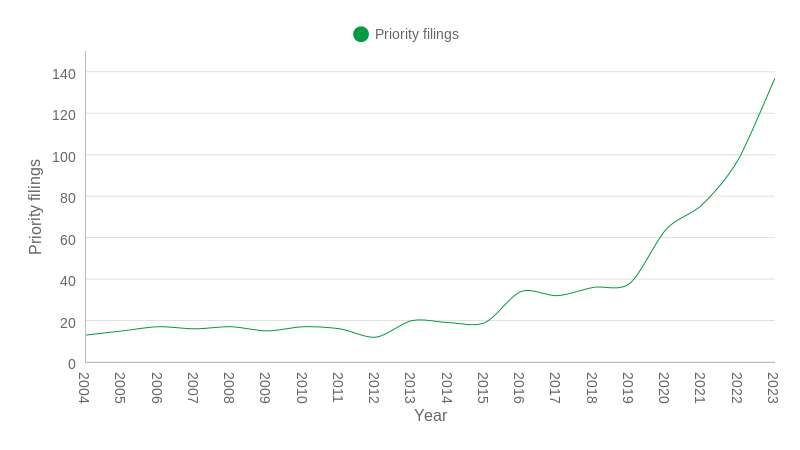
In the 15 years from 2004-2019, global patent filings for sustainable ammonia production remained consistently at a low level.
However, from 2019-2023, filings increased by 260% – reaching a new high of nearly 150 new applications in a single year – likely driven by decarbonisation policies such as the US Inflation Reduction Act, Japan’s Green Growth Strategy and the EU’s Carbon Border Adjustment Mechanism.
The use of sustainably produced ammonia, according to the research, is aimed at applications including fuel cells for transport including shipping, meeting countries’ national power demands and in fertiliser for agriculture.
Key technologies in development include electrolyser cells, producing green ammonia using renewable energy sources (deriving hydrogen from water electrolysis and nitrogen from the air) and creating blue ammonia while capturing and storing carbon dioxide emissions.
“It appears that industry is responding well to the demand for ammonia production decarbonisation and we anticipate ongoing growth in new patent applications.”
Countries and companies
Despite the US, in 2023, overtaking Europe for ammonia-related patent application numbers, South Korea outstripped both territories with a burst of innovation activity from 2022-2023, increasing patent applications almost three-fold – from 13 to 37. The push by South Korea’s government to replace power generation from coal and liquid national gas with hydrogen and ammonia-fuelled turbines is a likely factor in this growth.
Companies actively involved in sustainable ammonia development include South Korean energy company, SK Innovation, which led the field for new patent applications in 2023, along with joining Mitsubishi in part-funding US start-up Amogy’s investment in a fuel cell system to turn ammonia into hydrogen within vehicles.
Meanwhile, German industrial organisation Thyssenkrupp, has filed patents to retrofit ammonia plants for sustainable production and Danish company, Topsoe, has become the top filer for green and blue ammonia synthesis, while also licensing its technology to establish one of the first large-scale green ammonia plants in India, with Hygenco Green Energies.
*Inside Green Innovation: Progress Report – Fifth Edition, examines patent filing data through 31 Dec 2023, the latest date complete filing data is available from public sources.
**Appleyard Lees’ Inside Green Innovation: Progress Report – Fifth Edition is available to read here.