




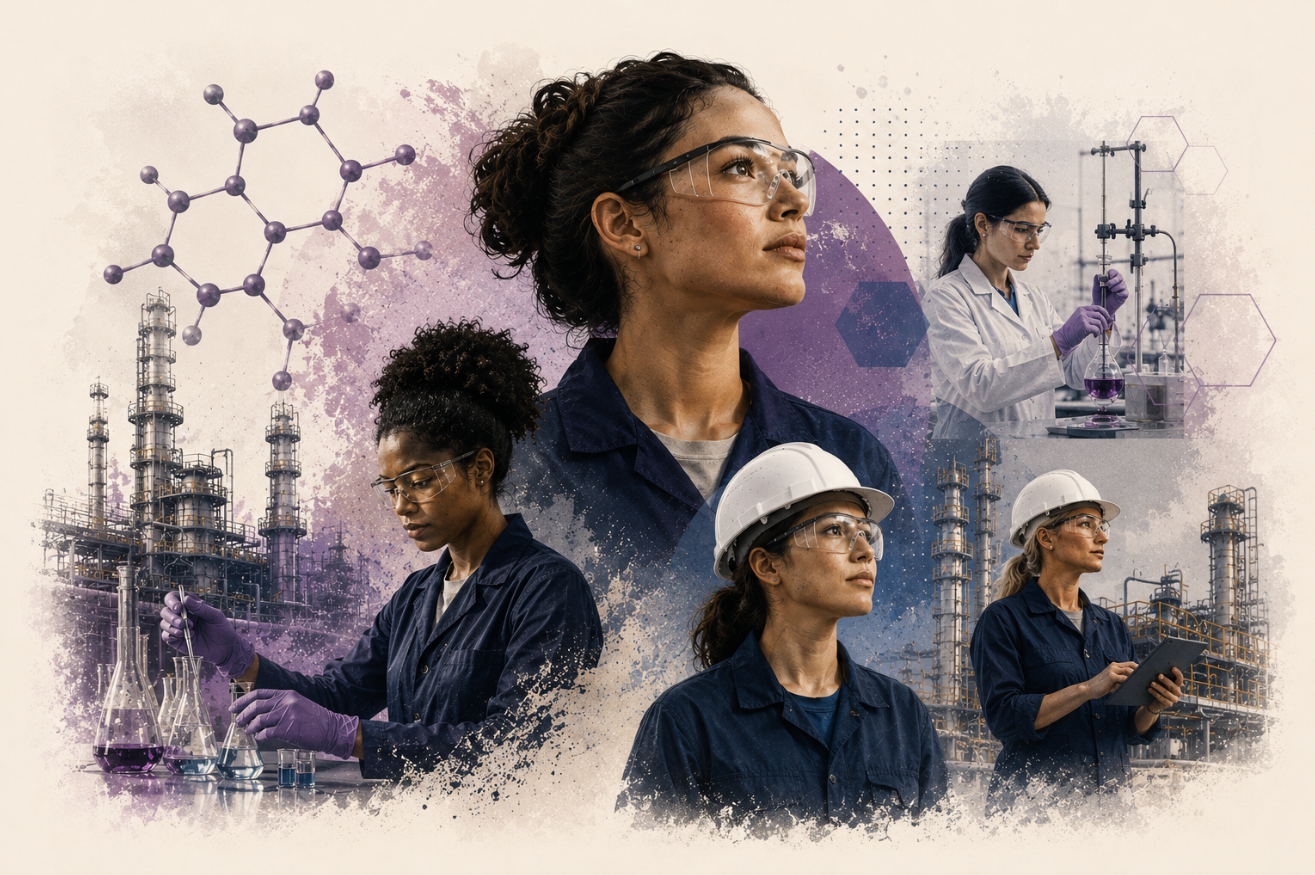
The chemical industry underpins modern life. It delivers essential materials for medicine, energy, agriculture, transportation, construction, and consumer products. It also drives progress on sustainability, cleaner processes, and solutions to climate and resource challenges. Women have long contributed to these advances, yet they remain underrepresented in the workforce—often around a quarter globally—and even more so in senior and technical leadership roles. Greater participation by women strengthens the industry and benefits society.
Women chemists and chemical engineers have delivered breakthroughs that improved everyday safety, efficiency, and quality of life. Their work has produced extraordinarily strong lightweight fibers used in protective gear that has saved lives, advanced molecular materials that made petroleum refining cleaner and more efficient while enabling better water purification and environmental remediation, created stain- and water-repellent treatments that transformed fabrics and surfaces, and developed processes for wrinkle-resistant and more durable textiles. These innovations demonstrate that diverse talent expands the range of problems the industry can solve and the quality of the solutions it creates.
Diversity improves outcomes. Research consistently shows that organizations with greater gender diversity in teams and leadership are more likely to outperform peers on innovation, decision-making, and financial results. The chemical sector faces complex demands: developing sustainable materials, reducing environmental impact, advancing pharmaceuticals and diagnostics, and supporting the energy transition. Fresh perspectives help challenge assumptions, identify overlooked opportunities, and accelerate progress. Women already earn a substantial share of chemistry and related degrees; converting that educational pipeline into industry careers fills critical talent needs and brings different approaches to research, process design, safety, and commercialization.
Careers in the chemical industry offer intellectual challenge, competitive compensation, and the chance to see ideas move from laboratory to real-world impact. Opportunities span research and development, manufacturing and process engineering, product development, environmental health and safety, supply chain, and leadership. Many companies are expanding mentorship, flexible work practices, and inclusion efforts, making the sector more accessible. The work itself carries purpose: safer materials, cleaner production methods, better medicines, and technologies that support a more sustainable future.
The industry solves problems that matter to people and the planet. When more women enter and advance within it, the collective capacity for discovery and practical application grows. The next generation of materials, processes, and solutions will be stronger, more creative, and more effective with their full participation. Encouraging women to pursue chemistry, chemical engineering, and related fields is not only a matter of fairness—it is a strategic necessity for an industry that must continually innovate.