




As sustainability targets become more ambitious across the pharmaceutical sector, innovative wastewater treatment technologies are helping manufacturers reduce waste, improve compliance and minimise environmental impact.
Background
As pharmaceutical manufacturers work towards ambitious science-based sustainability targets, wastewater management is becoming an increasingly important focus. One of the world’s largest pharmaceutical companies recently partnered with Arvia Water Technologies to explore a more sustainable approach to treating wastewater generated during the production of metformin; one of the most widely prescribed medicines for type 2 and gestational diabetes.
Metformin is an essential active pharmaceutical ingredient (API) that helps regulate blood sugar by reducing glucose production in the liver, limiting sugar absorption in the intestine, and improving the body’s sensitivity to insulin. However, its persistence in the environment presents a significant wastewater treatment challenge. The site’s wastewater treatment systems were unable to effectively degrade metformin, meaning contaminated wastewater was transported off site for incineration; a costly process with both environmental and operational implications.
The Objectives
The project focused on a clean-in-place (CIP) wastewater stream generated during the cleaning of manufacturing equipment and storage tanks. This stream contained metformin, its degradation product guanylurea, and other organic contaminants. To meet environmental compliance requirements, concentrations of metformin and guanylurea needed to be reduced below their respective Predicted No Effect Concentration (PNEC) thresholds of 1 ppm and 0.16 ppm.
The Solution
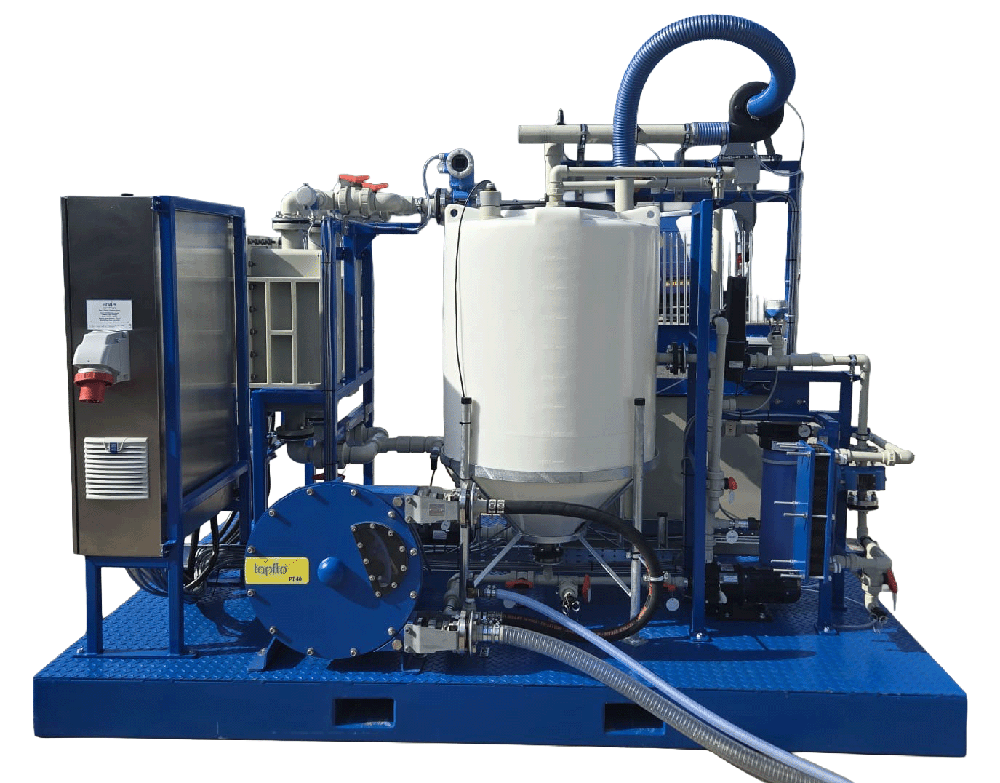
Arvia proposed its proprietary Ellenox™ Nyex.5 electrochemical oxidation technology as an innovative treatment solution. Unlike conventional tertiary treatment processes, the technology destroys hazardous organic compounds at a molecular level rather than transferring contaminants into another waste stream. The process operates without hazardous chemicals and produces no secondary liquid or solid waste, providing a cleaner and more sustainable approach to wastewater treatment. Treated water can then be safely discharged or, where appropriate, reused within the facility.
The project began with a comprehensive treatability study, which demonstrated that Ellenox Nyex.5 could consistently achieve the required treatment performance. Following these encouraging results, a pilot system was installed and operated on site to validate the technology under real manufacturing conditions.
The Results
Over the course of thirteen pilot trials, the system proved both reliable and highly effective, despite significant variations in wastewater composition. Metformin concentrations entering the system ranged from 210 ppm to 1979 ppm, while guanylurea levels varied from typical concentrations of 1.5 to13 ppm to a peak of 538 ppm. Across representative trials, Ellenox Nyex.5 consistently reduced both compounds below their stringent PNEC limits. Total Organic Carbon (TOC) removal exceeded 98%, with treated water achieving residual TOC concentrations of approximately 10 ppm.
The successful pilot demonstrated more than just excellent treatment performance. It validated a scalable, on-site solution capable of reducing reliance on off-site waste transport and incineration, helping the client lower both operational costs and environmental impact. By enabling the destruction of persistent pharmaceutical compounds directly at source, Arvia’s technology offers manufacturers a practical route to improving wastewater management while supporting broader sustainability objectives.
As the pharmaceutical industry continues to strengthen its environmental commitments, innovative treatment technologies such as Ellenox Nyex.5 are set to play an increasingly important role in helping manufacturers meet regulatory requirements, reduce waste, and advance towards a more sustainable future.