





For many people, COMAH compliance is synonymous with preventing major accidents.
Explosions, fires and large-scale releases of hazardous substances are often the incidents that attract headlines and shape perceptions of risk. However, analysis of Environment Agency enforcement data suggests that operators should be paying equal attention to a different challenge: environmental protection.
While prosecutions of COMAH site operators remain relatively infrequent, environmental permit breaches and pollution incidents continue to result in enforcement action and significant financial penalties.
Environmental Incidents Remain Firmly on the Regulator’s Agenda
Analysis of Environment Agency prosecutions between 1999 and 2024[i] identified 83 cases resulting in fines involving non-water-industry companies that operate COMAH sites, with total penalties exceeding £2.8 million. The wider dataset includes 322 prosecutions across all COMAH operators.
Although these numbers suggest prosecution is relatively uncommon compared with the size of the UK’s COMAH-regulated sector, they also demonstrate that environmental compliance remains a key area of regulatory focus.
The introduction of the Environmental Offences Sentencing Guidelines in 2014 fundamentally changed the financial consequences of environmental incidents. Penalties that might previously have been viewed as a cost of doing business can now result in substantial fines, reputational damage and increased scrutiny from regulators, investors and local communities. In some cases, the wider costs associated with remediation, operational disruption and reputational damage may exceed the value of the fine itself.
“Many environmental incidents do not arise from catastrophic failures, but from routine issues such as loss of containment and drainage management failures.”
The Risk Is Not Always a Major Accident
One of the most interesting observations from the enforcement data is that many environmental incidents do not arise from catastrophic failures.
Instead, they are often linked to issues such as loss of containment, inadequate pollution controls, failures in drainage management, permit breaches or deficiencies in operational procedures.
These are the types of incidents that can occur during routine operations and, in many cases, are preventable.
As a result, pollution prevention measures that may once have been viewed as secondary considerations are increasingly becoming critical components of environmental risk management.
Pollution Prevention Remains a Critical Control
The recurring themes seen in Environment Agency enforcement cases are reflected in established industry guidance. CIRIA C736, Containment systems for the prevention of pollution, emphasises the importance of adopting a layered approach to pollution prevention rather than relying on a single control measure.
The guidance highlights the role of primary, secondary and tertiary containment in preventing pollutants from reaching the environment and stresses the need to consider drainage infrastructure, spill response arrangements and site-specific risk factors as part of an integrated containment strategy.
For COMAH operators, this approach can help reduce the likelihood of relatively small incidents escalating into environmental permit breaches or pollution events with significant financial and reputational consequences.
In practical terms, this may include measures such as secondary containment around storage areas, drain protection and drain closure systems, bund management, firewater containment arrangements and effective spill response capability. While these controls may not attract the same attention as major accident prevention systems, they often represent the last line of defence between a loss of containment and a pollution incident.
Prevention Is Becoming as Important as Response
Historically, significant investment has been directed towards preventing major accident scenarios. That focus remains essential, but enforcement trends suggest operators should also review the practical controls that prevent relatively small releases from becoming environmental incidents.
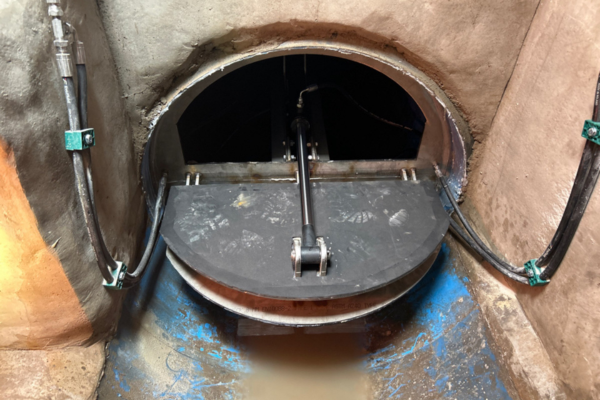
Recent projects are reflecting this shift towards proactive pollution prevention. For example, automatic drain closure systems are increasingly being specified as part of environmental risk management strategies, helping operators prevent contaminants from entering drainage networks during spill or firewater incidents.
A Shift Towards Proactive Environmental Management
Recent enforcement activity also suggests that regulators are placing increasing emphasis on environmental outcomes rather than solely focusing on the cause of an incident.
Since July 2024, the Environment Agency has accepted 15 enforcement undertakings[ii] from companies that operate COMAH sites, resulting in more than £4.6 million in financial contributions towards environmental and community projects.
Recent enforcement action highlights this shift in regulatory expectations. Following a major oil spill in Poole Harbour, the Environment Agency accepted a £6.1 million enforcement undertaking[iii] that combined environmental remediation, compensation for affected businesses and investment in measures to prevent a recurrence. The case demonstrates how regulators are increasingly looking beyond punishment alone, placing greater emphasis on environmental restoration and long-term improvements to pollution prevention and risk management.
This reflects a wider trend towards encouraging businesses to take responsibility for environmental harm and invest in measures that reduce the likelihood of future incidents.
For operators, the message is clear. Environmental protection is no longer a secondary consideration sitting alongside COMAH compliance; it is becoming an increasingly important part of it.
Looking Beyond Major Accident Hazards
Major accident prevention will always remain at the heart of COMAH regulation. However, the enforcement data highlights the importance of not overlooking the more routine environmental risks that exist across industrial sites.
Loss of containment, drainage failures and pollution incidents may not attract the same level of attention as a major accident scenario, but they continue to expose businesses to regulatory action and significant financial consequences.
As penalties increase and expectations around environmental performance continue to grow, investing in effective pollution prevention measures is becoming not only an environmental necessity, but also a business imperative.
As environmental expectations continue to evolve, many organisations are reviewing whether their existing pollution prevention measures remain aligned with current operational and regulatory risks. Secondary containment, drainage protection, drain closure systems, bund management and spill response planning are increasingly being recognised as important components of a proactive environmental management strategy.
A UK leader and pioneer in environmental protection since 1935, Darcy Group supports operators across the chemical, manufacturing, energy and infrastructure sectors in assessing and implementing measures that help reduce environmental risk, improve resilience and protect the environment.
Visit the Darcy Group website to find out more about how they can support your operations.
[i] Source: https://www.data.gov.uk/dataset/6f06910a-8411-4117-9905-6284f1997c33/environment-agency-prosecutions
[ii] Source: https://www.gov.uk/government/publications/environment-agencys-use-of-civil-sanctions/enforcement-undertakings-accepted-by-the-environment-agency-26-july-2024-to-12-february-2026
[iii]Source: https://www.gov.uk/government/news/major-oil-spill-in-poole-harbour-costs-company-6m