





Report reveals 17,500 incidents a year and escalating operational risks for an industry underpinning 96% of global manufacturing.
Global chemicals supply chains are facing unprecedented levels of disruption, with new analysis from DP World showing more than 17,500 serious global logistics incidents every year, resulting in over $12.2 billion in annual losses for cargo owners.
The study points to an industry operating with high exposure to disruption across critical borders, ports and regulations. With chemicals underpinning 96% of all manufactured goods, supply chain failures create rapid, economy-wide consequences, from manufacturing slowdowns to delays across agriculture, construction and consumer goods.
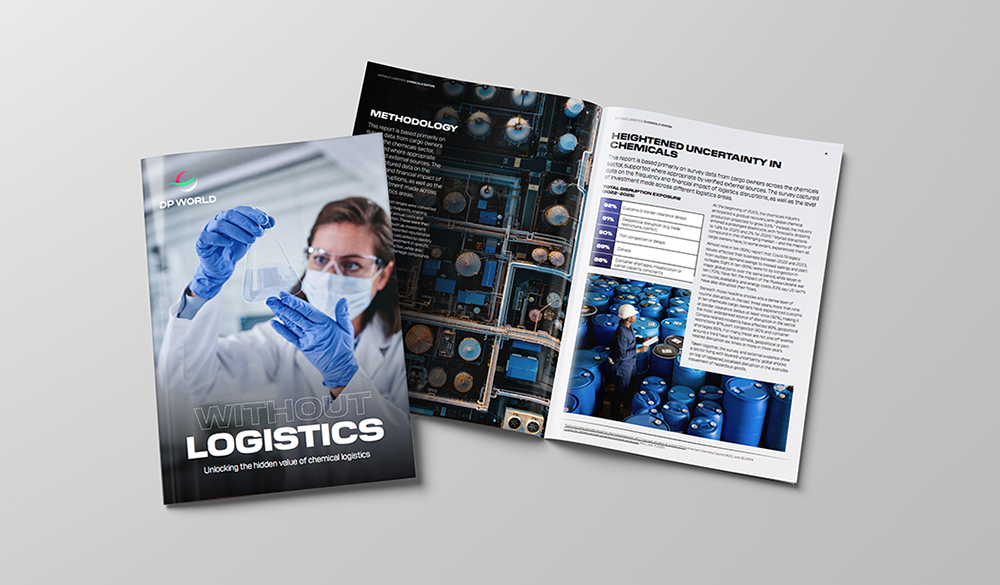
Over the last three years, 92% of chemical cargo owners have faced customs or border delays, 91% have been hit by geopolitical disruption and 90% have been impacted by port congestion.
A typical disruption event in chemicals logistics now costs around $700,000, with nearly a third of businesses suffering annual losses of above $1 million. one in ten faces disruptions costing $5 million or more. time losses are equally severe.
More than half of cargo owners also report losing over a month of operational time during periods of disruption, with transit and lead times rising by at least 11%.
Despite these pressures, nearly nine in 10 chemicals leaders remain optimistic about their ability to scale efficiently over the next three years.
As a result, logistics investment is set to increase: 86% of cargo owners cite digitalisation as the most likely area to deliver resilience.
This growing disconnect between cargo owner optimism and operational reality highlights deep structural challenges across the sector.
The most persistent pain points (forecasting, planning, supplier reliability and visibility) remain exactly the areas where digital tools, integrated networks and predictive modelling can have the greatest impact.
Markus Kanis, global senior vice president, chemicals, DP World, said: “Chemicals underpin every major industry and that makes logistics failures uniquely consequential.
“Our research shows a sector deeply exposed across borders, ports and geopolitical flashpoints, while managing hazardous and time-sensitive cargo. in today’s environment, visibility and flexibility are not optional, they are the foundations of resilience.”
“The direction is clear: chemicals leaders are shifting to data-led, proactive logistics, where forecasting, digitisation and integrated networks determine whether businesses can protect value, maintain safe operations and support the global industries that depend on them.”
Beat simon, chief operating officer – logistics, added: “Across every sector we study, disruption is exposing where supply chains lack resilience, but the chemicals industry faces some of the highest risks of all.
“The strongest performers invest early in visibility, scenario planning and multi-route robustness. by building networks that can flex and recover, chemicals cargo owners can reduce costs, protect commitments and strengthen their competitive position.”
As one of the world’s most interconnected industries, chemicals are a critical indicator of whether new logistics models can withstand rising geopolitical and climate volatility.
The analysis calls for heightened awareness of vulnerabilities and renewed commitment to redesigning supply chains that can operate reliably in a world where disruption is routine.
The data forms part of the company’s global study of 680 senior logistics leaders across eight industry verticals, including senior decision makers within chemicals businesses.
It includes primary surveys and a data model linking disruption costs to logistics investment, company size and reputational impact, providing an executive-level view of supply chain resilience and the cost of disruption.
The full findings are published in DP World’s without logistics: chemicals edition.