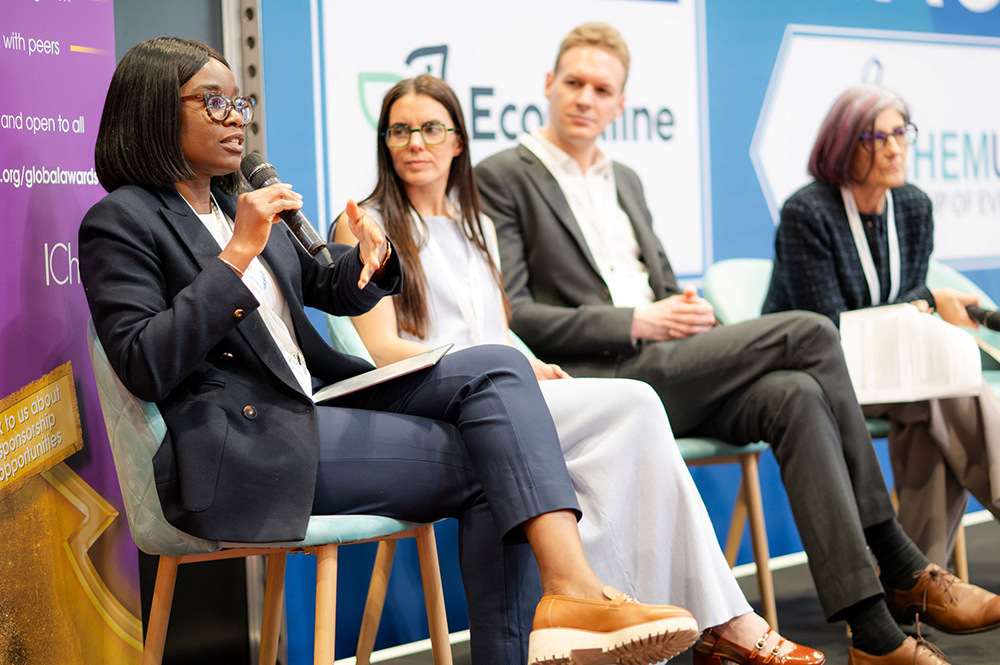






Tim Doggett, CEO of the Chemical Business Association (CBA), outlines how rethinking skills and inclusivity can futureproof the chemical supply chain workforce.
Despite the diverse range of roles and career opportunities it offers, the chemical supply chain is not necessarily recognised as an attractive or well-understood career destination. Furthermore, it faces a ‘war on talent’, while research among industry professionals shows that 85% believe a skills gap is present in the sector. Without decisive action, these issues could compromise the sector’s ability to deliver on its essential role in society and the economy.
While there’s not currently an acute shortage of workers, it’s crucial that businesses take some of the responsibility and are proactive to ensure a sustainable workforce pipeline. Many experienced members of the workforce are approaching retirement, with not enough new entrants coming through with the right skills to replace them, making the risk of knowledge drain real and pressing.
The challenge, however, is not simply about recruiting more people into the sector, but about reshaping perceptions of what a career in the chemical supply chain looks like and ensuring that people with diverse interests and skillsets see themselves reflected in it.
Central to this is adopting a wider and more inclusive view of skills; one that moves beyond the traditional boundaries of traditional STEM (Science, Technology, Engineering, and Mathematics) frameworks and challenges outdated stereotypes.
Putting the A in STEM
For decades, STEM has been the dominant framework in education and skills development, and its value is undeniable – STEM initiatives have inspired young people into scientific industries and raised their profile amongst potential employees, enabling progress across countless sectors.
Yet, there is growing recognition that STEM must evolve to recognise the creative skills needed in traditionally technical industries and to reflect the workforce of the future. The changing industry landscape highlights a need for a blend of expertise, with creative, ambitious problem-solvers needed along with technical knowledge. This is where STEAM comes in. By adding an ‘A’ (for the Arts) to the traditional STEM framework, it acknowledges that the people working within scientific industries have a varied range of roles, interests and educational backgrounds.
The Arts, in this context, are not confined to visual or performing arts, but include design, communication, language, critical thinking, and the broader skills that enable people to approach challenges in innovative ways.
STEAM is not about diluting technical expertise – chemists, engineers and logistics experts are crucial to the safe and efficient running of the chemical supply chain. But having individuals with creative backgrounds is crucial to ensure innovation and development. Specialists in marketing, communications, and emerging technologies like Artificial Intelligence, are just some examples of roles that are vital to ensuring the sector continues to move forward. Through STEAM, these roles are positioned as valued career options, getting the recognition they deserve.
Championing a diverse workforce
To tackle the skills gap and change perceptions of traditionally exclusive industries, the CBA has introduced Generation STEAM, an initiative that raises awareness of the wide variety of roles available in scientific industries among young people.
By raising the profile of roles less widely considered, it highlights the importance of fresh perspectives and ideas, helping all young people to see themselves in these sectors by breaking down outdated stereotypes about career pathways.
While the programme expands the traditional STEM framework by explicitly incorporating the Arts, it broadens the concept further, with the ‘A’ representing Ability, Ambition, Attitude and Adaptability, showcasing that with these Attributes, ‘Anything’ is possible.
The ‘A’ is also for Apprenticeships, serving as an important reminder that there are other routes into meaningful careers outside of the traditional University pathway. Too often, there is a perception that higher education is the only viable route into a professional career, but apprenticeships offer a valuable alternative, allowing young people to earn while they learn, gain practical experience, and develop the skills needed by industry.
Ambassadors for change
At the heart of Generation STEAM is its ambassador programme. Ambassadors – a diverse range of industry professionals at all stages in their careers – are tasked with engaging with schools, colleges, and communities, sharing their stories to raise awareness of the many different careers and pathways available in scientific industries. They help challenge stereotypes about the industry by sharing their personal career stories and demonstrating that there is no single route into the industry.
Where STEM careers may have once felt exclusive or inaccessible, ambassadors show that opportunities are wide-ranging and inclusive. By making the industry relatable and approachable, they help break down barriers and build confidence among young people who may not have previously considered a career in the sector.
Reframing opportunities
Although the skills gap in the chemical supply chain is a pressing challenge, it is also an opportunity to rethink how the industry is presented. It is the responsibility of those already in rewarding careers to demonstrate that opportunity exists everywhere.
Careers in technical sectors are not confined to narrow definitions. They are diverse, dynamic, and deeply rewarding. By embracing STEAM, industry can show young people that they have a place in this industry whatever their background, interests, or ambitions, widening the net when attracting the next generation of professionals.
To express an interest in becoming a Generation STEAM ambassador please get in touch by emailing info@generation-steam.com.