





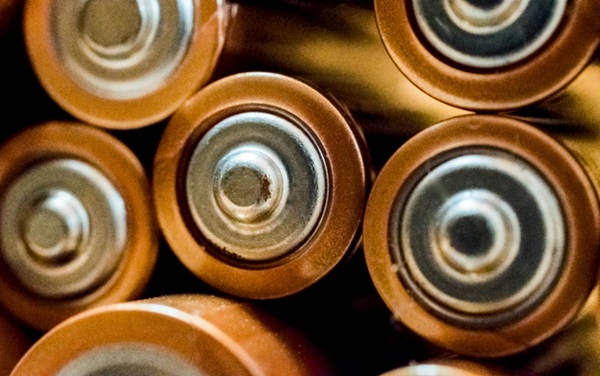
The Li-ion battery is usually composed of two electrodes, liquid electrolyte, and a separator with a permeable membrane, placed in between the two electrodes, to stop the battery from short circuiting. When the battery is first charged, delithiation occurs at the positive electrode (cathode) and lithium cations move through the electrolyte to the negative electrode (anode). Solid electrolyte interface (SEI) also occurs during this first charge. On further charges lithium cations move from the anode to the cathode.
Although Li-ion batteries are simple in design, the development of such batteries is fairly demanding. Electrochemical Impedance Spectroscopy (EIS) is often needed to support this development process due to its diverse measurement abilities. Additionally, it must be noted that when using this technique, the sample is neither influenced nor destroyed during the measurement. This means that consecutive measurements of the same sample are possible.
The primary measurements that can be taken using EIS are: the ionic conductivity of the electrolyte, the electrochemical window, the MacMullin number of the separator, tortuosity and the thickness of the SEI.
To learn more, please click to watch Metrohm’s webinar that introduces you to using EIS when taking measurements in Li-ion batteries: Li-ion batteries and Electrochemical Impedance Spectroscopy | Metrohm