





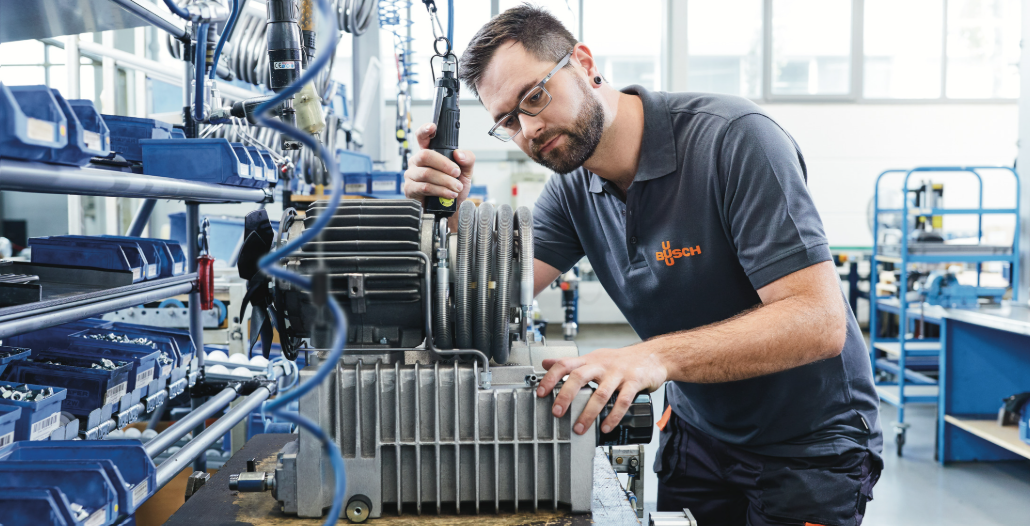
Achieving highly reliable operations is a key competitive advantage in chemical and pharmaceutical manufacturing, and maintenance plays a far more strategic role than is often recognised. Planned maintenance is not just about avoiding the direct costs associated with failed equipment; it is equally about preventing production loss and maintaining consistent and efficient output.
Well-maintained equipment operates more efficiently, reducing energy consumption and lowering overall operating costs. As a result, planned servicing and overhauls are increasingly viewed not simply as routine maintenance activities, but as a proactive strategy that supports not only reliable operations, but also efficient performance, and long-term cost control.
The cost of downtime
In chemical and pharma manufacturing, unplanned downtime rarely stays contained. A vacuum system failure may begin as a single equipment problem, but it can quickly cascade into lost production, a scrapped or delayed batch, overtime labour, emergency procurement, and knock-on disruption across interconnected processes.
The direct costs of breakdown, such as repair costs, are usually the easiest to measure. However, the hidden costs are often more significant. Production loss, direct labour costs, and the time spent troubleshooting an unexpected failure can quickly multiply the original impact.
Even direct repair costs can escalate in the event of a more serious breakdown such as a pump seizure. When a vacuum pump or other critical asset is allowed to run to failure, the repair rarely stops at the failed component. Connected components such as cylinders and rotors could also be affected, turning what could have been a simple scheduled maintenance event into a costly operational outage.
Why Maintenance is Critical for Compliance with hazardous area equipment (ATEX/UKEX)
In hazardous environments, compliance is not just about the equipment being correctly specified at installation; it also depends on the equipment being maintained in line with the manufacturer’s recommended schedule for inspection, servicing, overhaul, and instrument calibration.
When vacuum pumps are assessed for use in hazardous environments, the life expectancy of key components such as bearings is a critical consideration. If pumps are not overhauled in-line with the manufacturer’s schedule, these components may operate beyond their intended life, increasing the risk of failure. Additionally, without regular calibration, safety-critical instruments may provide inaccurate readings and fail to detect unsafe conditions.
For maintenance teams, the challenge is to keep equipment running, compliant and efficient. This is where structured service planning makes a difference. For example, with a comprehensive service contract in place, maintenance can be scheduled in advance, spare parts can be arranged ahead of time, and turnaround windows can be shortened. This can also make budgeting easier, since costs are more predictable.
Maintenance intervals are not ‘one size fits all’
A maintenance interval that works well for one application may be too long, too short, or simply not aligned with actual duty conditions for another. Vapour load, process temperature, chemical compatibility, run hours, and contamination risk can all influence how frequently a vacuum system should be inspected, serviced, or overhauled. Therefore, a maintenance regime built around the process itself, rather than relying only on generic service intervals, is the most effective approach, particularly when informed by data provided by condition monitoring solutions.
Summary
Ultimately, reducing unplanned downtime is not solely about responding quickly to failures. It is about understanding how equipment operates within the process, anticipating potential issues, and putting the right maintenance schedule in place to prevent them. In doing so, maintenance becomes not just a necessity, but a strategic tool for improving reliability, controlling costs, and supporting long-term operational performance.
This is where Busch adds value. With extensive experience across chemical and pharmaceutical applications, Busch has developed service solutions that are closely aligned with the operational and compliance requirements of the industry. Supported by a UK-wide service network of field and workshop-based engineers, UKAS-accredited (no.4338) calibration services, and condition monitoring solutions, designed to help operators minimize unplanned downtime, maintain compliance, and ensure long-term equipment reliability.
buschvacuum.com