




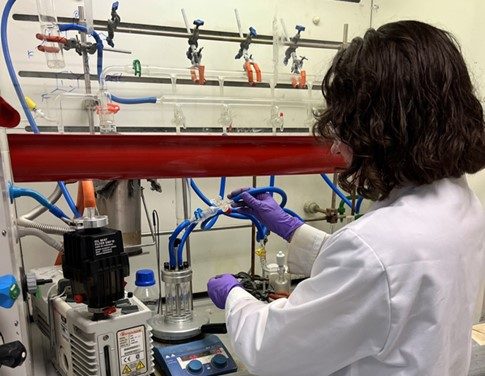
The Donnelly Research Group at Heriot-Watt University (Edinburgh, UK) has published a compelling case study highlighting significant operational and scientific advantages when performing parallel inert chemistry using the DrySyn OCTO 8-position Reaction Station, a compact benchtop synthesis platform developed by Asynt.
Parallel reaction screening lies at the heart of modern synthetic chemistry, allowing researchers to explore reaction conditions, catalysts and atmospheres simultaneously with high precision. Traditionally, achieving this level of control has required multiple hotplates, gas manifolds and bespoke glassware setups. By contrast, the DrySyn OCTO integrates key reaction parameters including stirring, heating, inert atmosphere control and reflux into a single, space-efficient platform designed to simplify complexity without sacrificing performance.
In its impartial evaluation, the Donnelly Group implemented the DrySyn OCTO to conduct multiple inert reactions in parallel under tightly controlled and repeatable conditions, delivering notable improvements in experimental workflow and screening throughput. The system enables eight concurrent reactions in standard 5–6 mL glass tubes with gas-tight closures, facilitating inert atmosphere chemistry without the operational challenges associated with traditional multi-station gas manifolds. Researchers reported improved ease of use, enhanced reproducibility and a more streamlined approach to condition screening, particularly valuable in exploratory synthesis and catalyst development.
Dr Liam Donnelly, leader of the Donnelly Group, explained:
“We are leveraging the DrySyn OCTO parallel synthesis reactor to screen catalysts and reaction conditions for polymer backbone modification, enabling the design of new degradable polymers. This medium-throughput approach allows us to run multiple reactions simultaneously under precisely controlled conditions, dramatically reducing the time and resources needed to identify optimal pathways.”
Dr Donnelly also highlighted the broader significance of this work in addressing global sustainability challenges:
“Traditional polymers are durable but often persist in the environment for decades, contributing to plastic pollution. By developing polymers with controlled degradability, we aim to combine performance with sustainability, creating materials that meet industrial needs while minimising long-term environmental impact.”
Engineered for versatility across both academic and industrial laboratories, the DrySyn OCTO is compatible with any standard magnetic hotplate stirrer, delivering powerful magnetic stirring and controlled heating across all eight positions. Low-cost consumables and straightforward sampling capabilities further enable chemists to adapt rapidly to evolving reaction design strategies without compromising safety, efficiency or precision.
The findings from Heriot-Watt University reinforce the growing importance of modular, benchtop synthesis tools in modern research environments. Platforms such as the DrySyn OCTO are enabling chemists to explore chemical space more efficiently while maintaining rigorous control over reaction conditions. With its blend of flexibility, reliability and user-focused design, the DrySyn OCTO continues to demonstrate how practical innovation can transform everyday laboratory workflows.
For further information please visit: https://www.asynt.com/product/illumin8-parallel-photoreactor/ or call +44 (0)1638 781709.