




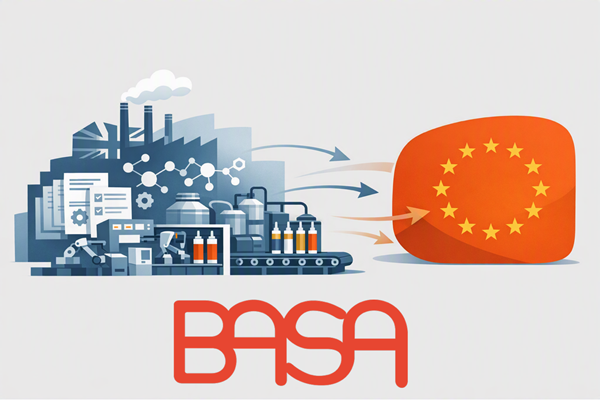
BASA has warned that proposed changes to the UK’s chemicals registration regime risk imposing burdens on business, undermining competitiveness and prompting manufacturers to relocate production to the European Union.
In its response to DEFRA’s consultation on the Alternative Transitional Registration Model (ATRm), the sector says it supports a robust, science-based UK regulatory framework, but argues the proposals could create serious practical and commercial problems across the supply chain.
A central concern is access to the data needed to support classification, risk assessment and registration. The industry says much of the toxicological and environmental information required for compliance remains tied up in EU REACH dossiers, to which UK formulators may no longer have reliable or affordable access. Without a clear mechanism for obtaining that information, businesses could face major costs, uncertainty, or the need to commission new studies.
The response also highlights the risk of manufacturing moving out of the UK. Companies supplying both the UK and EU markets already face parallel regulatory systems, and the sector warns that further duplication under ATRm could make UK production unviable for some products. Smaller manufacturers are especially vulnerable, with potential losses in jobs, technical expertise and innovation.
Another major issue is the difficulty of identifying the precise composition of polymer-based materials used in adhesives and sealants. Formulators do not have full visibility of the chemical make-up of raw materials because suppliers protect proprietary information. The industry argues that ATRm must recognise this practical limitation and provide a workable framework for products where full compositional certainty is impossible.
The response also raises concerns over the future of Substance Information Exchange Forums (SIEFs), warning that without stronger safeguards they could become opaque, costly and dominated by larger players. It calls for clearer rules on governance, cost-sharing, model contract terms and dispute resolution.
Alongside its criticisms, the industry is urging DEFRA to take a more proportionate, evidence-based approach. Recommendations include recognising EU REACH data where possible, developing a UK hazard database, conducting a full competitiveness impact assessment, and building on existing DUINs data to better understand how chemicals are used across the UK economy.
The message from the Adhesives & Sealants sector is clear: if the UK wants a successful post-Brexit chemicals regime, it must avoid replicating EU systems in ways that add cost without delivering meaningful additional benefit.
BASA represents the £1.7 billion UK and Irish adhesives and sealants sector, promoting innovation, compliance, and sustainability while supporting business growth and industry standards. Visit https://www.basa.uk.com/