




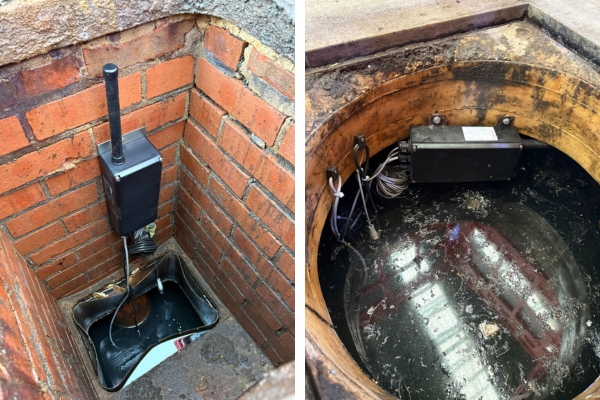
Industrial organisations operating multiple sites with oil-water separators could reduce waste management costs by more than half by adopting remote monitoring technology, according to new findings from Aquasentry.
The results follow a multi-site rollout of battery-powered separator alarms, which enabled a major operator to move away from fixed emptying schedules and adopt a more responsive, data-led approach to maintenance.
Fixed Emptying Schedules Driving Unnecessary Costs
Across sectors including logistics, manufacturing and retail, many organisations rely on oil-water separators to prevent pollutants entering drainage systems and watercourses.
To remain compliant with environmental regulations, these systems must be emptied before reaching capacity. However, this is often managed through pre-planned tanker visits, regardless of actual fill levels.
This approach can lead to unnecessary collections, increased operational costs and avoidable environmental impact.
Shift Towards Condition-Based Maintenance
In response, a growing number of operators are moving towards condition-based maintenance strategies, supported by real-time monitoring.
Aquasentry’s separator alarm system is designed to monitor oil, silt and liquid levels within separators, providing alerts via text or email when intervention is required.
The system can be accessed remotely through a centralised platform, allowing organisations to monitor multiple sites and assets in real time without the need for on-site checks or fixed servicing schedules.
Measured Savings Across Multi-Site Estate
One organisation trialling the technology across several locations reported a reduction in waste management costs of up to 57% within six months.
Following the initial trial, the system was deployed more widely across its estate, delivering annual savings estimated in the tens of thousands of pounds.
The transition to a demand-led emptying schedule also reduced the number of tanker visits required, improving operational efficiency while maintaining compliance.
Supporting Compliance and Long-Term Performance
In addition to cost savings, remote monitoring provides greater visibility over separator performance, supporting compliance with standards such as BS EN 858-2.
Ongoing maintenance and calibration services ensure systems continue to operate effectively over time, reducing the risk of undetected failures or pollution incidents.
Technology Enabling Greater Visibility
The monitoring system uses sensors installed within the separator, transmitting data via a secure gateway to a central platform.
This allows operators to:
• Receive real-time alerts when thresholds are reached
• Monitor multiple assets across different locations
• Reduce reliance on manual inspection and routine servicing.
The system can be installed in separators from any manufacturer and choosing a battery-powered system removes the reliance on a mains power supply, makes it suitable for a wide range of sites and applications.
Aquasentry’s current systems rely on mobile data. A new LTE-M-enabled oil-water separator alarm, launching later in 2026, will offer improved underground signal penetration and greater range.
Reducing Cost and Environmental Impact
By aligning maintenance activity with actual need, organisations can achieve both financial and environmental benefits.
Reducing unnecessary tanker movements not only lowers operational costs but also contributes to a reduced carbon footprint, supporting wider sustainability objectives and environmental management systems such as ISO 14001.
Growing Adoption Across Industry
As regulatory expectations increase and organisations seek greater efficiency, technologies that improve visibility and control over environmental infrastructure are seeing wider adoption.
Aquasentry, part of Darcy Group, manufactures its monitoring systems in the UK and supplies them to customers across multiple sectors, supporting a shift towards more proactive environmental risk management.
The Bottom Line
For multi-site operators, the move from fixed schedules to condition-based maintenance represents a significant opportunity to reduce costs, improve compliance and minimise environmental impact.
And as this deployment demonstrates, the savings can be substantial.
For more information about wireless separator monitoring, please contact Aquasentry:
Website: Aquasentry.uk
Email: sales@darcy.co.uk
Telephone: +44 (0)1732 762338