




A new form of chemistry is ‘reinventing’ the process of discovering and manufacturing small molecules.
Excelsior Sciences is developing the novel approach that ‘machines can do and AI can use’ to enable closed-loop drug discovery.
Small molecules, the class of chemical matter primarily built from carbon-carbon bonds are central to life-saving drugs, manufacturing materials, veterinary and agricultural products, and much more.
While AI has the potential to transform these fields, it requires the ability to make and test new small molecules in multiple assays fast enough to feed data-hungry algorithms.
Earlier attempts to automate chemistry have failed because they replicate the traditional artisanal approach to chemical synthesis.
Excelsior Sciences has created a proprietary form of chemistry that machines can do. At the heart of this innovation are smart bloccs—automated synthesis-friendly chemical building blocks that enable iterative carbon–carbon bond formation.
Smart bloccs serve as a modular chemical “language,” allowing AI to derive novel insights and guide discovery in closed-loop learning systems.
“Drug discovery and manufacturing are at a crossroads in the West,” said Michael Foley, PhD, co-founder and CEO of Excelsior Sciences.
“To stay competitive, we must discover and develop better medicines—faster. This can only be achieved through automated synthesis platforms capable of rapidly producing purified compounds and testing them across multiple assays simultaneously – generating the rich data AI needs to cut years off traditional discovery timelines.
“Our proprietary smart bloccs platform is the first system to seamlessly integrate discovery and scale-up chemistry, enabling the reshoring of drug discovery and manufacturing. We are starting with drug discovery but will work across multiple sectors.”
The Reshoring Imperative
Excelsior’s launch comes at a pivotal time for the pharmaceutical industry, which is under pressure to secure supply chains and reshore more of its discovery and manufacturing capabilities. The United States’ overreliance on offshoring for the discovery and manufacturing of the nation’s drug supply represents a major strategic vulnerability—one the pharma industry is committing upwards of $250 billion to address.
Excelsior Sciences aims to make reshoring affordable for discovery and manufacturing, providing strategic immunity to nations whose pharma supply chains are vulnerable to sudden geopolitical shifts.
Building the Future of AI-powered Chemistry
The company has raised $95m in support of its work, and to build partnerships across a range of sectors, including therapeutics and materials science.
The financing includes a $70 million Series A, co-led by Deerfield Management, Khosla Ventures, and Sofinnova Partners. Other participants include MIT.
“Everyone’s talking about AI-designed drugs, but they cannot become a reality without scalable chemistry. Excelsior is the missing piece,” said Edward Kliphuis, Sofinnova Partners.
“They’ve built the right chemistry for the AI era, where design, synthesis, and testing happen in a closed loop. It’s turning theory into tangible molecules and real medicine. That’s why we backed this exceptional team as part of the Sofinnova Digital Medicine strategy.”
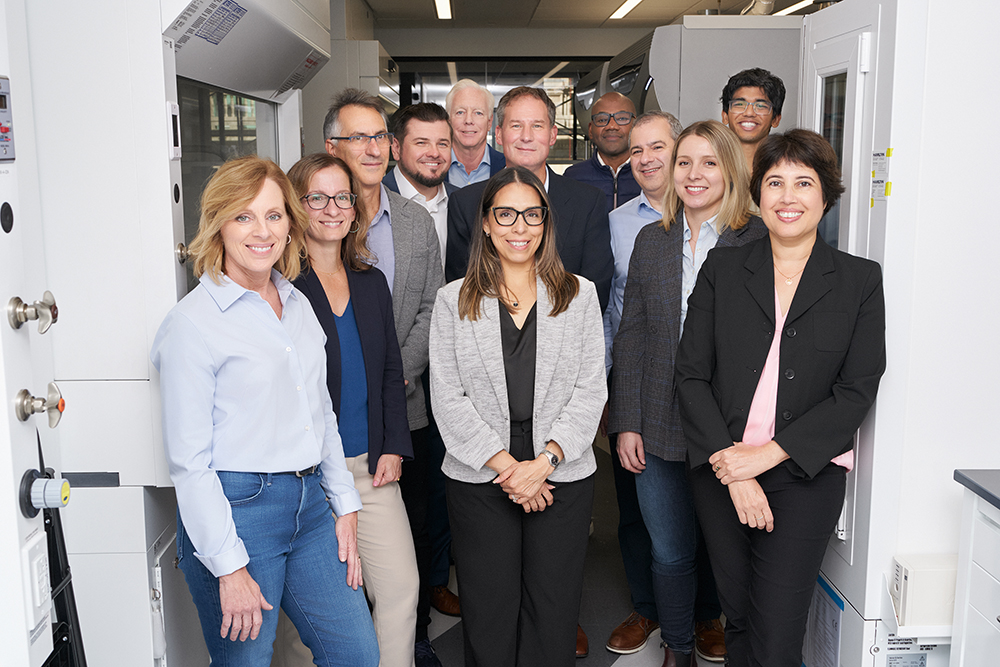
Spun out of Deerfield Management and housed in custom-built laboratory space at Cure in New York City, Excelsior is co-founded by Michael Foley, PhD, Marty Burke, MD, PhD, Bartosz Grzybowski, PhD, and Jana Jensen, PhD, MBA, reflecting the company’s marriage of AI and chemistry.
Organisations, institutions or researchers wishing to register interest in becoming an Excelsior Sciences partner should contact the team at: partnering@excelsiorsci.com.